Solving Minnesota’s School Trust Land Puzzle in the Boundary Waters
What are School Trust Lands?
When Minnesota became a state in 1858, the federal government set aside portions of the land through grants "for the use of schools".
These land grants reserved 8.1 million acres that became jointly referred to as “School Trust Land”. The state ended up selling some of that land to private owners. Now, the state owns roughly 2.5 million acres of School Trust Lands.
At a Glance: School Trust Lands in the Boundary Waters Canoe Area Wilderness
-
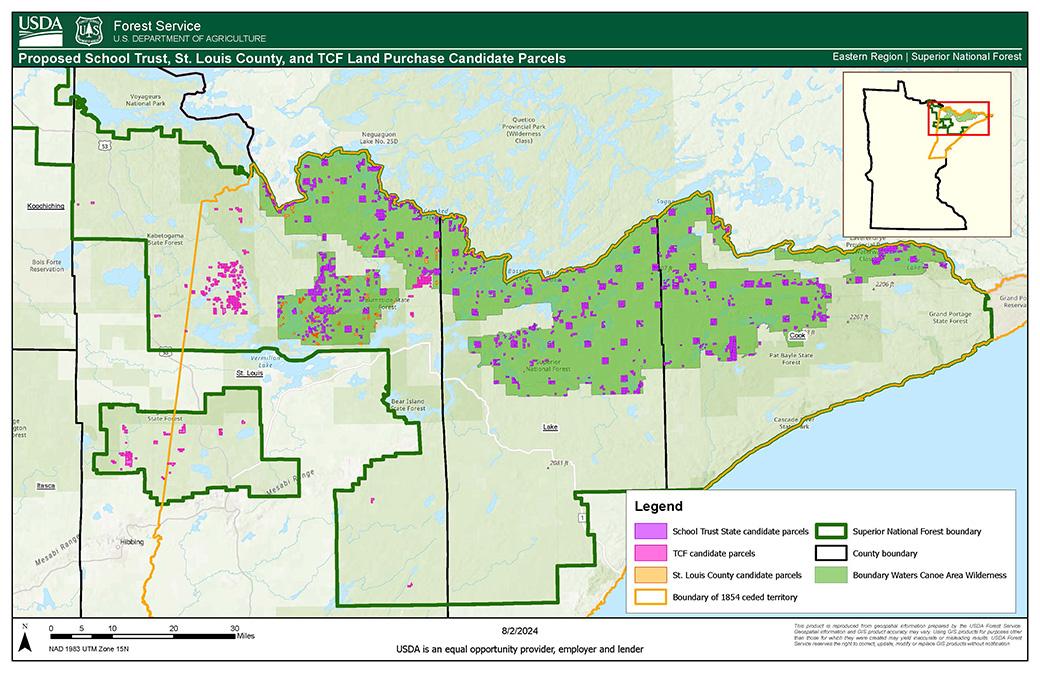
The State of Minnesota owns about 80,000 acres of School Trust land within the Boundary Waters Canoe Area Wilderness (BWCAW). The Minnesota DNR manages these state trust lands, while the U.S. Forest Service (USFS) manages the BWCAW itself.
-
Because of the protections afforded by the Wilderness Act of 1964 and the Boundary Waters Canoe Area Act of 1978, land-use restrictions in BWCAW prevent revenue-generating activities—meaning the trust cannot harvest timber, mine minerals, or develop those lands.
-
Minnesota’s School Trust Land laws require generating revenue, which cannot be met under wilderness protections that prohibit development.
Land swaps
Overseeing School Trust Lands in the BWCAW has long posed management issues for the DNR and the USFS. Since around 2009, Minnesota has worked to resolve these issues.
A 2012 proposal was made to exchange some School Trust Lands in the BWCAW for federal parcels in the Superior National Forest and sell the remaining lands. It was later withdrawn.
Lawmakers from the Iron Range supported the swap because lands acquired outside the BWCAW, but still within the Superior National Forest, could potentially be used for mining or logging.
Under Minnesota law, the state retains mineral rights. Land swaps or sales generally cover only the surface, such as forests, buildings, and not the minerals beneath.
Making progress
Now, the State of Minnesota is selling 80,000 acres of School Trust Land located within the wilderness area to the USFS.
This represents 7% of 1.1 million acres within the region of the BWCAW.
The sale will resolve the congressional order from the Boundary Waters Canoe Area Act of 1978 and compensate the state for the loss of School Trust Land within the Wilderness.
The sale also prevents lawmakers from pursuing a land swap that would trade School Trust Lands inside the BWCAW for federal land outside the wilderness but still within the Superior National Forest. In doing so, it reduces the risk of future mining or leases to timber companies on replacement lands.
Looking ahead
When sold, the proceeds from the sale will go into the state’s Permanent School Trust Fund, and are expected to be between $20 million and $40 million. Every school district or charter school in the state will continue to annually receive around $60 million from that fund. The fund is now worth over $2 billion.
The money invested in the trust from the sale of 80,000 acres could increase to over $850 million in roughly 50 years.
As recently as February 2025, lawmakers attempted to stop the sale of School Trust Land in the BWCAW despite the clear benefit to the Permanent School Trust Fund.
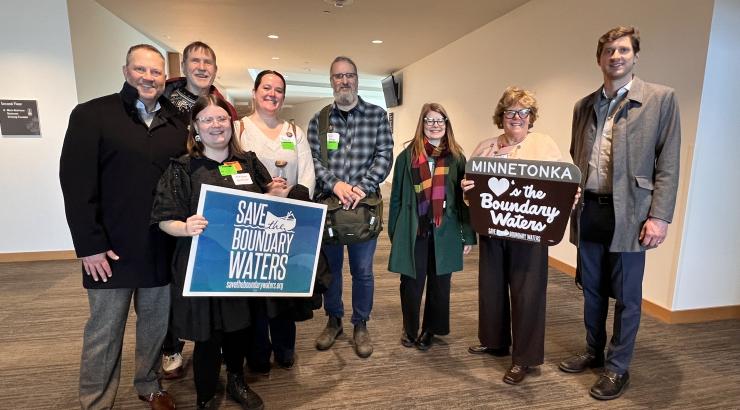
"Sale of these lands to the US Forest Service is absolutely the right move, something we in the conservation community has been working on for 30 years." - Becky Rom, Ely native and national chair for Save the Boundary Waters
In addition to benefiting schools, the sale will also:
- Consolidate federal ownership of lands within the BWCAW
- Resolve Tribal leaders’ concerns that the loss of federal lands outside the BWCA could limit areas where their members can hunt, fish, or gather under treaty rights.
The land transfer between the state and the Forest Service is expected to be completed by the end of 2026.
Northeastern Minnesotans for Wilderness, the lead organization of the Save the Boundary Waters Coalition, has proactively worked toward and supported a School Trust Land buyout for nearly 30 years.
Sources