H.J. Res. 140 signed into law - what's next for Boundary Waters protections
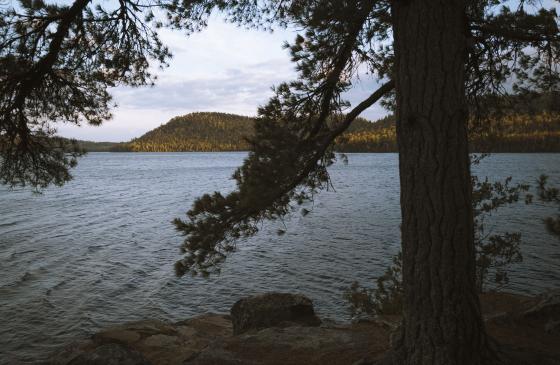
On April 27, the President signed H.J. Res. 140 into law. This resolution used the rarely used Congressional Review Act (CRA) and officially revokes Public Land Order (PLO) 7917, which was signed in January 2023 and protected over 225,000 acres of federal land in the headwaters of the Boundary Waters and Voyageurs National Park from the threat of sulfide-ore copper mining for 20 years.
What happened:
On Thursday, April 16, 2026, the U.S. Senate passed H.J. Res. 140, a devastating bill that overturns protections for the Boundary Waters watershed. The vote passed 50-49. This legislation will grant mineral leasing in the headwaters of the Wilderness, meaning Twin Metals, a Chilean-owned company, could proceed with its efforts to build a copper mine on Birch Lake near the Boundary Waters Canoe Area Wilderness.
What this means:
H.J. Res. 140 revokes a 20-year mining ban (also known as a mineral withdrawal or Public Land Order) in the Boundary Waters watershed. It also prevents future administrations from implementing the same safeguards on the Boundary Waters. Not to mention, it sets a dangerous precedent for rolling back protections on other public land using the Congressional Review Act, which has never before been used to challenge a mining ban. This is grim news for Canoe Country and America’s public lands.
To be clear, this does not allow a mine in the Boundary Waters. But it does reopen the same watershed to toxic copper mining, just a few miles from its border. Pollution from this mine would flow directly into the Wilderness, impacting all downstream landscapes, including Voyageurs National Park Canada's Quetico Provincial Park.
H.J. Res. 140 strips away critical, science-based, broadly popular protections from the Boundary Waters watershed, opening its fragile waterways to copper mining and putting these pristine waters at permanent risk.
This is a dark time for the Boundary Waters and a warning call for public lands nationwide. By advancing H.J. Res. 140, the Senate has set a dangerous precedent that could open the door to rolling back protections for protected landscapes across the country.
Watch our recent update webinar from 4/16 to learn more about what this means and what’s next: https://youtu.be/8kBYmWqawW8
Wondering how your senator voted?
%20Banks%20(R-IN)%20Barrasso%20(R-WY)%20Blackburn%20(R-TN)%20Boozman%20(R-AR)%20Britt%20(R-AL)%20Budd%20(R-NC)%20Capito%20(R-WV)%20Cassidy%20(R-LA)%20Cornyn%20(R-TX)%20Cotton%20(R-AR)%20Cramer%20(R-ND)%20Crapo%20(R-ID%20(2)_0.png)
“Republicans privately told me that they knew this was wrong, and I wish they had voted with their conscience… One day, the shoe will be on the other foot, and they will regret what they did to the Boundary Waters today — because this was a mistake.” - Senator Tina Smith
Let your U.S. Senators know what you think regarding their vote for or against H.J. Res. 140 that strips protections for the Boundary Waters watershed.
What’s next?
The fight is far from over. We will continue to fight to protect the Wilderness in Washington, D.C. and in Saint Paul, MN. Minnesota can—and must—be the backstop against these unprecedented attacks on the Wilderness.
What can the State of Minnesota do to stop this?
The federal government is moving to roll back protections for the Boundary Waters watershed, and the state of Minnesota is an important backstop to a mine being built next to the Wilderness.
There are a few ways that the state of Minnesota can stop the Twin Metals mine from moving forward:
- State regulatory authority - Minnesota Department of Natural Resources (DNR), the agency that would permit the Twin Metals mine, has the power to say NO by denying an eventual Twin Metals State Permit to Mine.
- Legislation - Passing a permanent protection bill through the Minnesota Legislature and blocking other bad Boundary Waters bills is critical to achieving lasting protection.
- Litigation - Lawsuits have the power to stop or delay projects and challenge existing state mining standards.
The Twin Metals mine is proposed on a patchwork of state, federal, and private lands. Twin Metals needs “permission” and approval to mine on all of these lands. That means that even with federal leases… a mine cannot be built without state permits and approval!
Minnesota’s Department of Natural Resources (DNR) is the primary regulator for mining in the state of Minnesota. Even if federal leases are issued, a mine cannot be built without state permits. The DNR must issue a “Permit to Mine,” which must show that a mine can: prevent water pollution, safely store tailings, reclaim the site after mining, and protect nearby ecosystems. If the DNR determines the project poses unacceptable environmental risks, it can deny the permit outright. The DNR controls this process and can determine that the project does not meet environmental standards. In 2022, the state actually halted environmental review for the Twin Metals project after federal leases were canceled. Additional State Permits and approvals also come from state agencies such as the Minnesota Pollution Control Agency and include water discharge permits, wetlands permits, dam safety permits, and air permits. If any one of these permits or approvals is denied, a mine cannot proceed.
Minnesotans, take action! The Boundary Waters Permanent Protection bill (H.F 309 and S.F 875) is currently active in the MN State Legislature. If you live in Minnesota, now is the time to raise your voice right here at home - contact your State elected officials and tell them to support protecting the Boundary Waters, permanently.
Contact your state elected officials
Read more about this in our blog: How can the State of Minnesota protect the Boundary Waters?
Litigation
We’ve received a number of questions about potential legal action in response to this week’s passage of H.J. Res. 140. Litigation remains under active consideration, but we do not have any new federal filings to announce at this time. We will share updates as soon as we are able.
In the meantime, we have an ongoing lawsuit in Minnesota under the Minnesota Environmental Rights Act (MERA). This lawsuit challenges the state’s current mine siting rules and remains an important part of our broader legal strategy.
A mine won’t be built tomorrow, and probably not for a few years. But it’s important that we work on all fronts to protect the Wilderness from toxic pollution.
What about Canada?
Proposed sulfide-ore copper mining near the Boundary Waters would threaten a shared watershed that flows through Canada’s Quetico Provincial Park, Lake of the Woods, and ultimately Hudson Bay, raising serious cross-border pollution concerns under the 1909 Boundary Waters Treaty, which requires both the U.S. and Canada to prevent harm to shared waters. The International Joint Commission has repeatedly warned about potential cumulative and transboundary mining impacts, while Canadian officials, First Nations communities, and environmental advocates have voiced strong opposition due to risks to ancestral lands, sacred sites, and water quality. Although Canada formally raised concerns about renewing Twin Metals leases, U.S. federal agencies largely failed to address treaty obligations or cross-border impacts.
Read more: What about Canada?
Thank you
Our Boundary Waters Champions in Congress stood strong – we are especially grateful to Senator Klobuchar and Senator Smith. Ahead of the vote, Senators Smith, Klobuchar, Baldwin, and Heinrich took the floor to advocate for the Boundary Waters and oppose HJ Res 140, with Senator Smith holding the floor for over 3 hours. You can learn more about that here.
We would also like to thank Senators Collins & Tillis for listening to their constituents and voting to protect this unique Wilderness.
Thank you to all of our partners - including businesses, organizations, creators, coalition members, and even celebrities - for spreading the word about this harmful legislation. While we didn't win the vote, we rallied the most people around the Boundary Waters that we’ve ever witnessed. That is powerful.
And finally, THANK YOU. We are so grateful to have you with us in this fight. We cannot do this work without people power. Thank you all so much for showing up. Keep showing up. This is how we will win.
This a bump on the road, but we'll get where we're going!
What can I do next?
Contact your senators, again. - Let your U.S. Senators know what you think regarding their vote for or against H.J. Res. 140 that strips protections for the Boundary Waters watershed.
Make a gift - As threats to the Boundary Waters continue to escalate, we need to ensure that we’re ready to meet every challenge without hesitation. Our Boundary Waters Defense Fund gives us the resources to respond swiftly and strategically to emerging threats in 2026 and beyond.
Stay up to date - We will be fighting the decision to overturn the mining ban and advocating for permanent protection for the Wilderness this year, and we need you with us. Sign up for our action alerts so you can be the first to know when we need you to speak loudly for this quiet place.
Minnesotans - The Boundary Waters Permanent Protection bill (H.F 309 and S.F 875) is currently active in the MN State Legislature. If you live in Minnesota, now is the time to raise your voice right here at home - contact your State elected officials and tell them to support protecting the Boundary Waters, permanently.