Waiting on the fate of the Boundary Waters...week 9. What you need to know.
It’s a good week for Canoe Country. Why? Because the Senate still hasn’t voted on HJ Res. 140 — the terrible legislation that would open up the Boundary Waters watershed to toxic copper mining. Waiting is unnerving, but your calls are making a difference.
Senators have one more week before the spring recess — keep the pressure on by calling them.
This week's action:
For those of us in Minnesota—here’s what you can do:
-
Keep calling Senators Amy Klobuchar and Tina Smith—they’re both opposed to this bill, and you can thank them for their work.
-
Then, help your friends and family in other states call their Senators—use our Action Center for a script and numbers.
-
Then, send a message to your state-level lawmakers—there’s never been a more important time for them to support and work to pass the proposed state bill for permanent protection of the Boundary Waters watershed. We must make sure Minnesota can prevent this dangerous mine from ever being built.
What’s this bad Boundary Waters legislation all about?
- HJ Res 140 would undo the 20-year mining ban that safeguards the Boundary Waters watershed from copper mining.
- Prevents future administrations from using the same safeguards on the Boundary Waters that are currently in place.
- Sets a dangerous precedent for rolling back protections for public lands across the country using the Congressional Review Act.
What’s the timeline?
- This resolution passed the U.S. House in January; now it's with the Senate.
- The vote could come at any moment. When it’s scheduled, we typically get only 24–48 hours’ notice, and under the Congressional Review Act, the Senate has just 60 legislative days to act before the window closes at the end of April.
Myth-busting (#3 of too many)
MYTH: This kind of mining would be safe to do in the Boundary Waters watershed
FACT: Sulfide-ore copper mining is inherently risky.
- 100% of copper mines experience spills or accidental releases.
- This type of mining has never been done in Minnesota—and it has a track record of pollution wherever it occurs.
- When sulfide-bearing ore is exposed to air and water, it creates sulfuric acid (essentially battery acid), which can leach toxic metals into surrounding waters.
FACT: The Boundary Waters watershed is uniquely vulnerable.
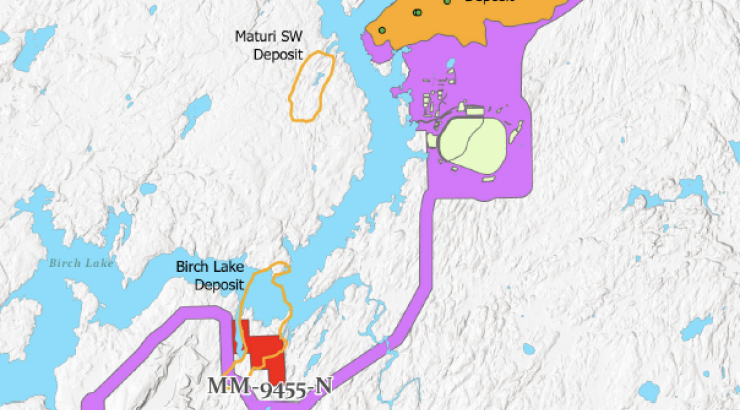
- The proposed Twin Metals mine risks triggering acid mine drainage, releasing sulfuric acid, heavy metals, and other toxins.
- These pollutants would flow through interconnected waterways—spreading from the heart of the Boundary Waters along the international border, into Voyageurs National Park, Quetico Provincial Park, and ultimately Hudson Bay.
- This contamination could persist for decades or even centuries.
FACT: This mining would pose serious risks to human health.
- Sulfide-ore copper mining releases hazardous pollutants, including sulfuric acid and heavy metals, that are harmful to people and wildlife.
- This kind of mining releases 6 of the 10 toxins the World Health Organization identifies as most dangerous to human health.
- Even small amounts of this pollution can have significant public health impacts.
- Sulfide-ore copper mining would increase mercury contamination in water and in fish tissue, due to the release of additional sulfate.
- Sulfate plays a key chemical role in the methylation of mercury, which is the form of mercury that bioaccumulates in fish tissue and subsequently works its way into the food chain.
- Increased methylation would cause more methyl mercury to build up in fish—which is a powerful neurotoxin, putting people and wildlife who eat those fish at greater risk.
- Mercury is already a public health threat; for example, a Minnesota Department of Health study found that one in 10 infants in the nearby Lake Superior region were born with unsafe levels of mercury in their blood, leading to poor neurodevelopment.
Inspiration of the week:
Seeing the northern lights (aurora borealis) is a bucket-list experience for many, and March is an excellent time to spot them. Read this guide to "Aurora Chasing" for beginners.