We’re celebrating International Dark Sky Week!
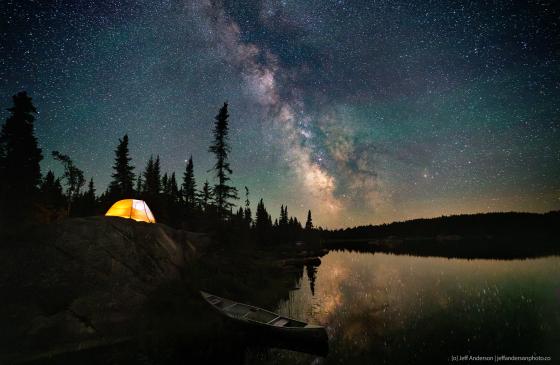
Water rippled gently along the Boundary Waters shoreline. Above, the dark sky hung in silence, while a small campfire snapped and crackled nearby. A faint light crept over the eastern horizon, signaling the approach of dawn. Brilliant points of starlight twinkled overhead while a few satellites traced paths from horizon to horizon. Venus and Jupiter marched across the sky, each following its orbit around the Sun.
The darkness was restful and comforting, the kind of experience only found in remote places.
Dark skies benefit humans and wildlife
We're celebrating International Dark Sky Week April 13-20! This commemorative week, celebrating our dark skies, started in 2003 to raise awareness about the negative impacts of light pollution worldwide. One of their priorities is to educate and encourage people, including communities and industries, to reduce light pollution and use lighting in more conscientious ways.
This year's theme is GO DARK, which encourages people to enjoy the night sky by camping or hiking, or by sitting in their backyard with their outdoor lights turned off.
It has been proven that dark skies have an impact on the health and wellness of people and wildlife. Humans sleep better when it is dark. It’s well known that better sleep results in less stress and healthier bodies.
Skies without light pollution help to sustain ecosystems. They’re essential for animals—particularly birds and insects—who migrate. According to the U.S. Fish and Wildlife Service, almost half of the species on earth are nocturnal, relying on the dark to navigate, hide from predators, and reproduce.
Plus, researchers and scientists benefit from the added knowledge gleaned from night skies. For thousands of years, humans have relied on the night sky for navigation, cultural heritage, and stories connected to stars and constellations.
Dark Sky.org has listed multiple ways you can make an impact during International Dark Sky Week:
- Track light pollution and submit your findings to a global database.
- Get your community to formally support the initiative for less light pollution.
- Encourage your local library or bookseller to set up a display with a focus on night skies and astronomy.
- Ask your local brewery or coffee shop to promote a dark brew.
- Invite friends and family over and host a dark sky game night or night hike at a local park.
- Update your outdoor lighting at home. Commit with others to make more sustainable lighting choices.
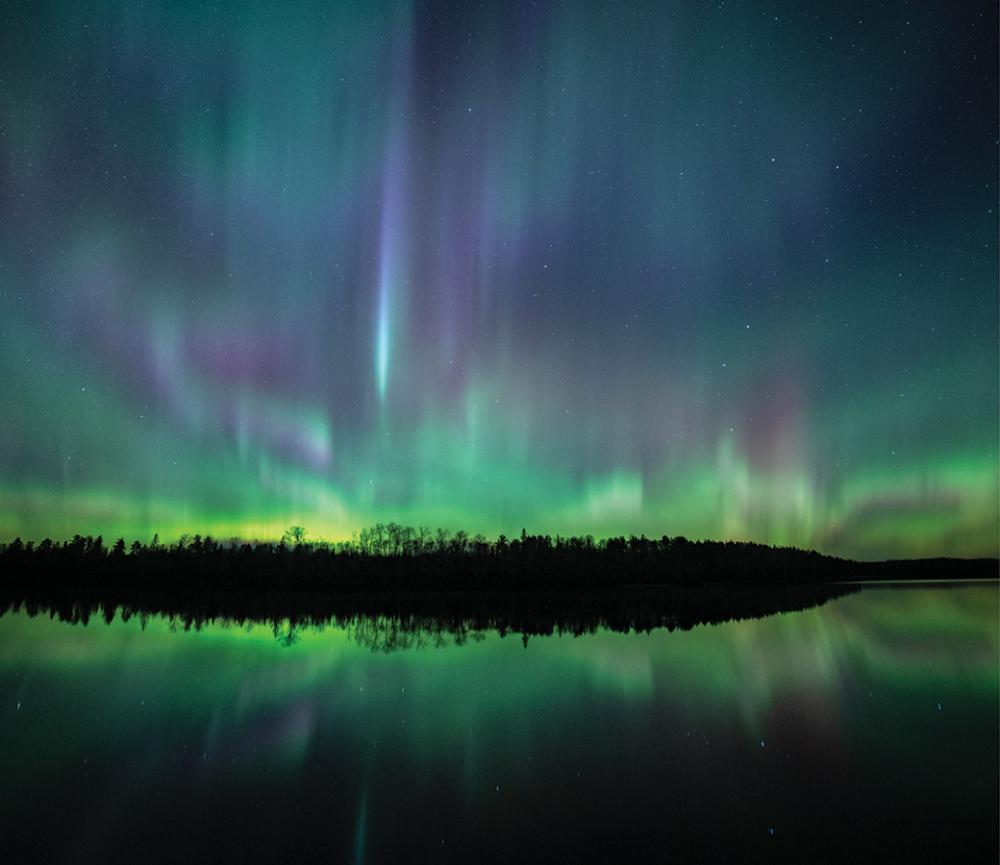
![The aurora borealis fills the night sky above the treetops. [o] Alex Falconer](/sites/default/files/styles/image_gallery/public/image-gallery/aurora%20above%20the%20treetops.jpg?itok=oFyqL91v)
People visit the Boundary Waters because of its skies
Stargazing is one of many reasons that people come to the Boundary Waters. Not only are numerous celestial bodies visible, but for many it's a lifetime opportunity to see the aurora borealis. Is there anything better than watching long ribbons of light dance over a Wilderness lake on a calm night? Another highlight is hanging out by the campfire, and identifying constellations such as the Big Dipper to the north.
The Boundary Waters, which covers 1.1 million acres, is so significant that it was listed as the world’s largest dark sky sanctuary in 2020. Although larger sites have since been designated, it helped raise awareness of the importance of these special places. The Boundary Waters was also the first, certified dark sky site in Minnesota.
In a news article by Dark Sky.org, Ann Schwaller, Boundary Waters Canoe Area Wilderness Program Manager of the Superior National Forest, said that “Conservation and preservation laws, policy and guidance all lead to the protection of the night skies for scientific, natural, educational, cultural, and public enjoyment values, which are all part of protecting wilderness character.”
Stargazing is great anytime. We’re sharing a few tips that will make it even better in the Boundary Waters.
- During summer, darkness comes much later. As you’re planning your trip, look up when the sunrise and sunset occur.
- Check a moon phase calendar to find the darkest nights.
- Download an app that forecasts the likelihood of seeing the aurora borealis (northern lights). Otherwise, the National Oceanic and Atmospheric Administration (NOAA) provides real-time updates on active lights.
- Use your phone to identify constellations. There are a number of apps you can use without cell coverage that allow you to identify constellations, stars and planets. Prefer to go old school? Grab a waterproof reference guide that you can stow in a pack.
- Fall and winter can also be great times to enjoy the night sky, as darkness comes earlier.
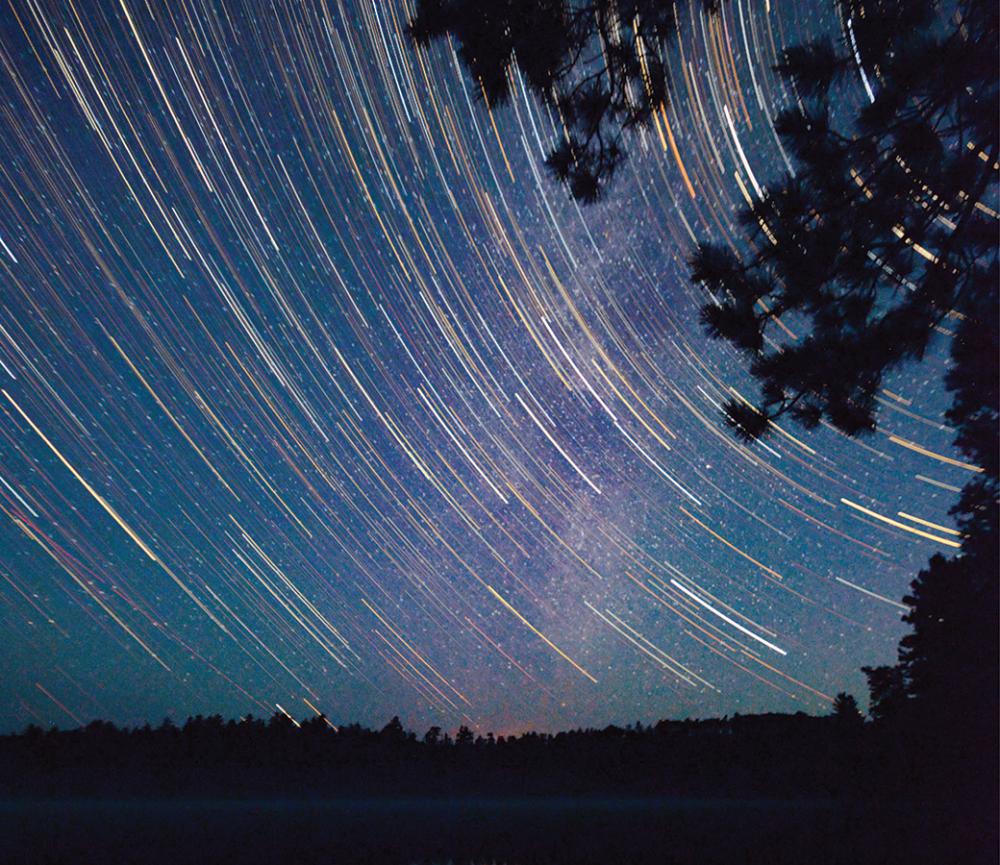
![Campsites in the Boundary Waters campsites have front row views of the night skies. [o] Pohle Creative](/sites/default/files/styles/image_gallery/public/image-gallery/campsite%20night%20sky%20photo%20pohle%20creative_0.jpg?itok=wHqrhzu7)
Wilderness skies are threatened
Twin Metals, a subsidiary owned by Antofagasta, a Chilean mining company, is proposing to build a copper-nickel mining facility just miles from the border of the Boundary Waters. The mine site would sit near the shores of Birch Lake, located about eight miles south of Ely. If the mine were built, light from it would undoubtedly impact the Wilderness and the experiences of those who visit. Large-scale mining operations often require bright and continuous lighting for safety and production, which contributes to light pollution and can be seen from miles away.
Many who visit the Boundary Waters come seeking solitude, beauty, and a chance to reset from their busy, often stressful lives. Darkness is essential for this reset. The quiet allows people to think, reflect, and reconnect.
Light pollution from a copper-nickel mine would forever disrupt those experiences. How can the Wilderness character, so tirelessly fought and cared for, continue to remain the same if a mine is built just outside its borders?
Join countless others who cherish these night skies and want to protect them from potential harm.
Celebrate dark skies with us today and give a gift that will help preserve Wilderness skies now and for generations to come.