Veterans have been defending Minnesota’s public lands and Boundary Waters for over 100 Years
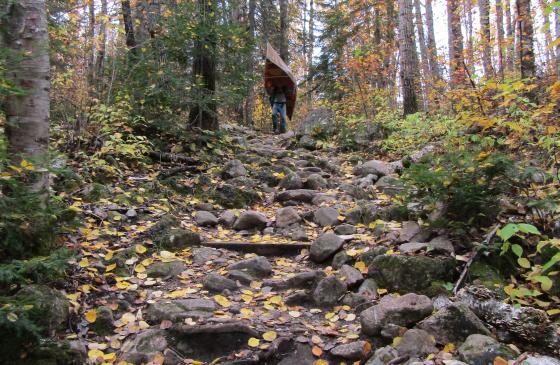
A group of generous supporters knows that permanent protection is within reach, and they just announced a $55,000 matching gift during early giving for Give to the Max Day.
On Veterans Day (Nov. 11), I’ll be deer hunting amidst the vast expanse of public lands that define northern Minnesota. And on Nov. 12 I’ll join veterans and others at American Legion Post 71 in West Duluth for a presentation on Minnesota’s public lands, Boundary Waters, and some of the veterans who have defended them for over 100 years. For me, this feels like coming full circle.
From 1986-90 I was an Air Force ROTC cadet at the University of Minnesota-Duluth and during July 1990 was commissioned as a second lieutenant. The next summer I attended Undergraduate Missile Training (UMT) at Vandenburg Air Force Base (AFB) in California before reporting to Grand Forks AFB in North Dakota to serve as a missile launch officer.
My commitment to the Air Force, our country, and Constitution was influenced and nurtured by our great public lands estate. In the words of Hal Herring (a Field & Stream contributing editor and former host of the Backcountry Hunters & Angler’s Podcast & Blast), “The future of the American public lands is as important to our nation as the Bill of Rights or the Constitution itself.”
Minnesota’s more than 12 million acres of public lands encompass places like the Boundary Waters Canoe Area Wilderness (BWCAW) and surrounding Superior National Forest, the Chippewa National Forest, state parks and wildlife refuges, wildlife management areas, scientific and natural areas, aquatic management areas, national wild and scenic rivers, and more.
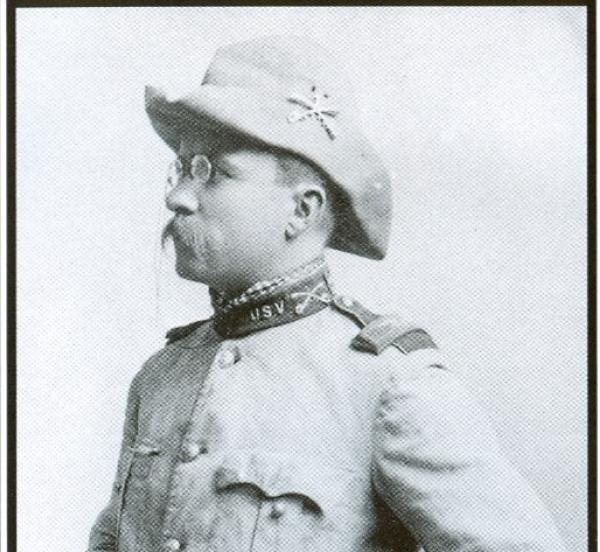
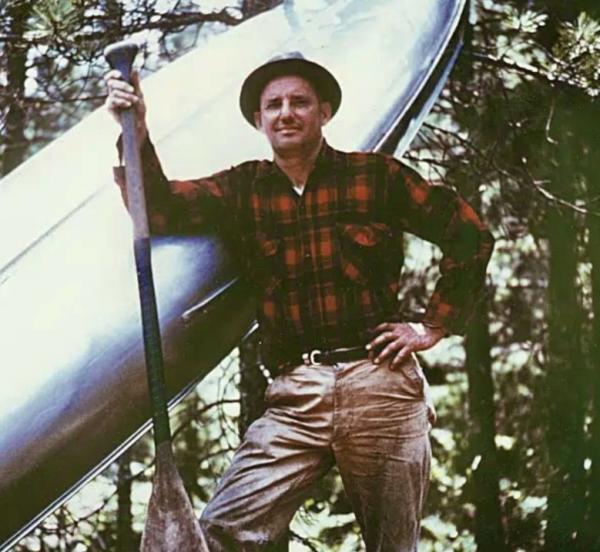
There are untold numbers of selfless and dedicated hunters, anglers, and others who have played a role in protecting and perpetuating our public lands and Boundary Waters legacy in Minnesota, but some of the more prominent among them include military veterans like Theodore Roosevelt, Bill Rom, and Jimmy Carter.
A foreign-owned mining company, Antofagasta of Chile, doing business in Minnesota as Twin Metals, is looking to build a sulfide-ore mine upstream from the Boundary Waters near Ely. “Every sulfide mine in a water-rich environment, like Minnesota, has contaminated surface and/or groundwater with toxic acid mine drainage: 100 percent failure rate,” I wrote in a May 2024 Duluth News Tribune commentary.
To counter this threat, during August Gov. Tim Walz (an Army National Guard veteran) signed an executive order to further protect Minnesota’s Boundary Water Canoe Area Wilderness from nonferrous, or sulfide-ore, mining. The governor’s order directed the Minnesota Department of Natural Resources (DNR) and Minnesota Pollution Control Agency to cease all permitting and environmental-review work on nonferrous mineral mining projects in the Rainy River Headwaters Watershed.
The DNR has since stopped issuing new state mineral or surface leases for sulfide mining operations in the watershed, an Aug. 21 Outdoor News report explained. The state will also decline to serve as a cooperating agency in any federal environmental review of nonferrous mining proposals in the watershed and will draft legislation seeking a permanent ban on such mining in the region.
“Governor Walz just stood up for Minnesota, for Minnesotans, and for the Boundary Waters,” Save the Boundary Waters Executive Director Ingrid Lyons stated. “The federal government sold out our canoe country earlier this year by stripping away protections that took hundreds of thousands of Minnesotans' voices and years of work to secure, all while ignoring science and the will of the public.”
After the recent (Nov. 3) midterm elections—a historic repudiation of the Trump administration agenda in Minnesota and nationwide—Lyons added, “This winter, the Minnesota Legislature can build on Governor Walz’s leadership by passing a state bill that would permanently protect this extraordinary Wilderness from sulfide-ore copper mining.”
In the Spring 2021 Boundary Waters Journal, Stu Osthoff wrote about an encounter he had with a veteran in the Boundary Waters. “Turns out the guy was on a ‘decompression trip’ after a brutal stint in Iraq,” he explained. “This guy had been through hell and back, including fighting for my freedom to enjoy this wilderness … I insisted he deviate from his last ten days of oatmeal with a real bacon and egg breakfast … this very small act of kindness out in the bush did wonders for restoring this soldier’s faith in humanity.”
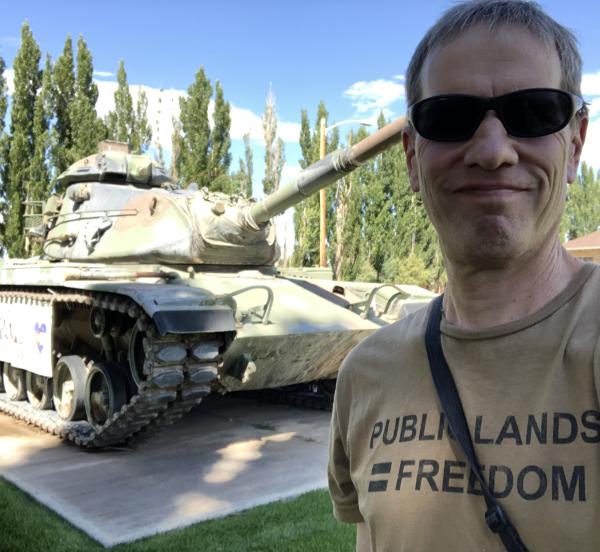
Trevor Hubbs, former Backcountry Hunters & Anglers Armed Forces Initiative (AFI) Coordinator, said: “Veterans have a powerful card to play. We might as well play that card in favor of conservation.” Another AFI leader added, “For many of us, these wild places are the last bridge between the war we left behind and the peace we still seek.” “Public Lands = Freedom.”
Former President Barack Obama said, “Our true strength as a nation is measured by how we take care of our veterans when they return home.” And renowned northern Minnesota canoe country guide and conservationist Sigurd Olson wrote: “In the armed forces all over the world are young men [and women] who are dreaming of the days when they will return and again enjoy the backcountry they have known and it is up to us here to keep the faith with them and do what we can to save their precious heritage.”
On Veterans Day we recognize those Americans who have given so much to protect democracy and our unequaled public lands heritage. Since this great nation was formed these lands have been jointly owned by every citizen. They would not be ours, nor in such relatively good health, if not for the sacrifices and commitment of our veterans and many other American patriots from all walks of life. Finally, in the words of one pundit after the Nov. 3 elections: “This is our democracy and we sure as shit are not letting go.”
David Lien