A Love Letter to the Boundary Waters by Noelle Jean Seward
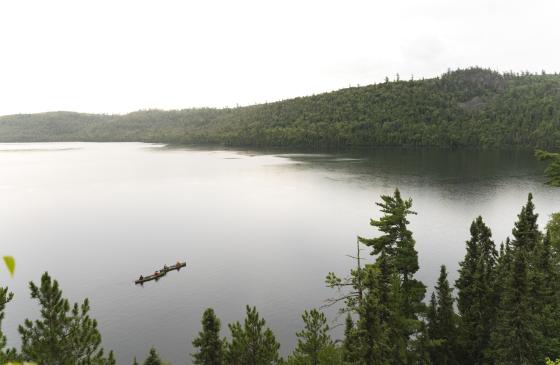
Noelle Jean Seward, known as “Birdie” on trail, is an outdoor storyteller, writer, and mountain athlete who thru-hiked the PCT in 2024 and has since explored Patagonia, the Andes, and the Alps, and recently the Boundary Waters, while sharing her adventures through film, photography, and writing.
Photos by Ryan Rumpca of Fram Studio Company
----
I don’t know how a place that carries sound so easily can hold such comfortable silence. A stillness only punctuated by the loons or a distant wolf or Madie singing Perfect Day from the Legally Blonde soundtrack.
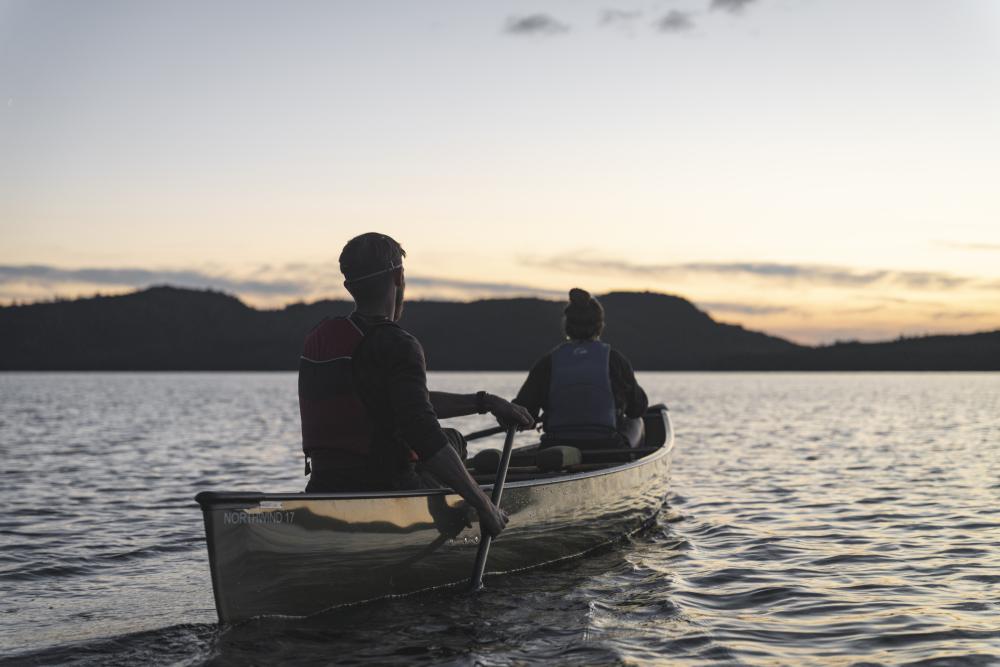
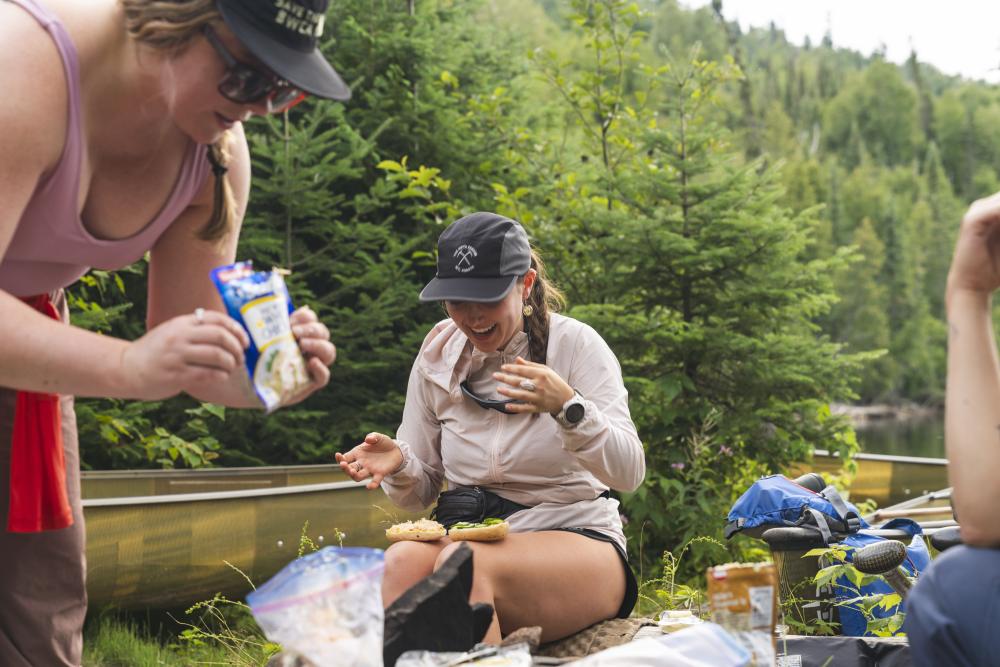
From post-sunset canoes into blue hour, to waking up in a fog-obscured sunrise, to pancakes with edges crisped by an extra-buttered pan and powdered coconut milk in my coffee — this trip could be best summed up as adult summer camp for conservationists.
The Boundary Waters is America's most visited wilderness – a 1.1 million-acre connected system of lakes and rivers with forested shores. The wolves, moose, loons, lynx, walleye, and northern pike call this place home. And while this place offers rare opportunities for solitude, adventure, quiet, dark skies, and connection with nature, a Chilean mining company only has eyes for the profits of its proposed copper-nickel mine and not the pollution that would flow directly into the Boundary Waters.
This type of mining has never been done in Minnesota. All of the research shows how sulfide-ore copper mining can produce acid mine drainage, sulfuric acid, and heavy metals that risk polluting interconnected waterways. And it’s not just the ecosystem itself that depends on clean water, but the communities and livelihoods connected to it. Namely, a $1.1 billion tourism economy and approximately 17,000 jobs.
The six of us came here with Save the Boundary Waters to document what makes this place so special. And I uncovered more than I expected.
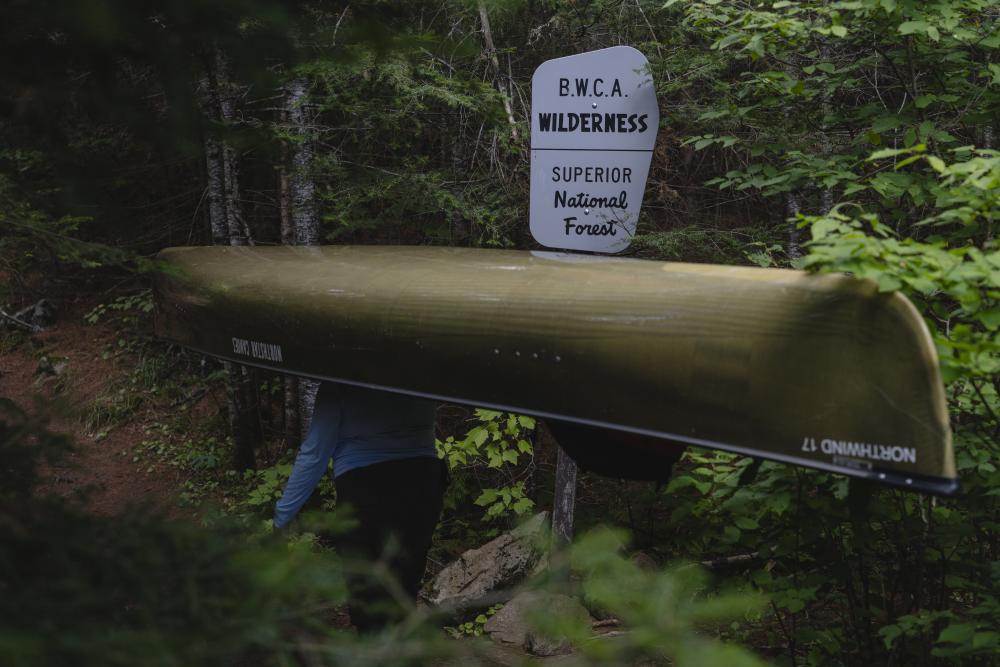
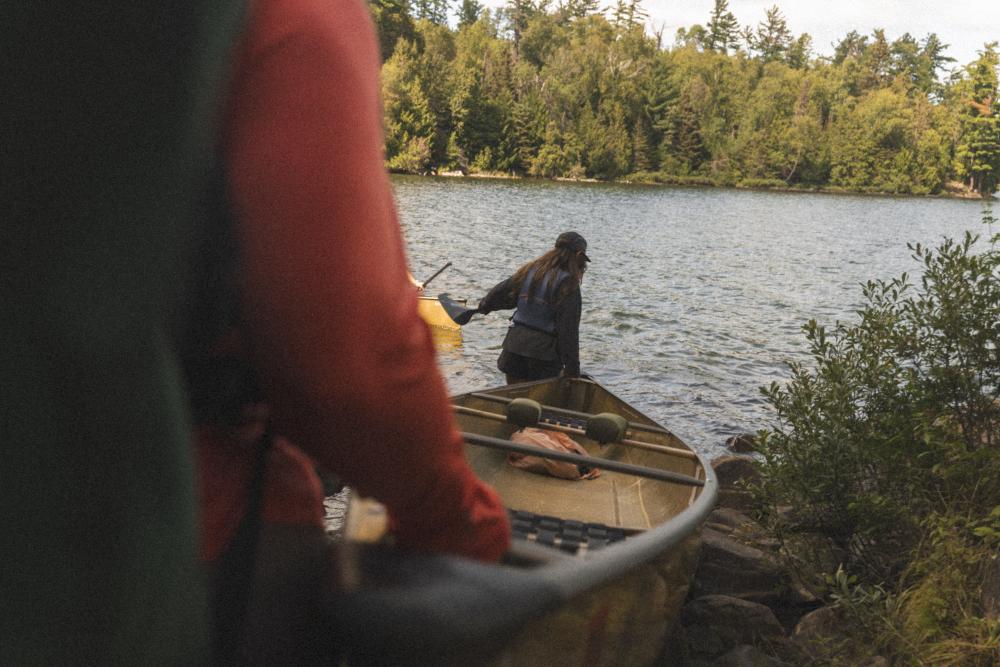
We woke up in bunk beds at Hungry Jack Outfitters in true summer camp fashion. After breakfast, our canoe outfitter Ben gave us the run down of the best places to explore over the next few days. As we traced possible routes on the map, Ben made two claims that shaped the trajectory of our time in the Boundary Waters. He pointed to a lake and said, “this is the cleanest lake in the lower 48.” With no service to verify his claim, we were eager to check this out. He then pointed to a trail. According to a couple of his buddies, this 2 mile section of trail is “harder than any 2-mile section of the PCT.” As someone who people should not play board games with and a PCT 2024 thru hiker, I knew I wasn’t going to leave the Boundary Waters without finding out for myself.
We loaded our gear into four portage packs that dwarfed my usual ultralight backpacking setup. This included large pots and pans, multiple intact onions, and a 6 person tent that we later named “Casa de Villa” after one of those bungalows on an island dating Reality TV show.
As I walked up to the set of three Hungry Jack Outfitters canoes stacked at the edge of Hungry Jack Lake, a mildly disorienting wave of nostalgia tugged on my mind. I felt like I’d been here before, which was odd because this was my first time in the Boundary Waters.
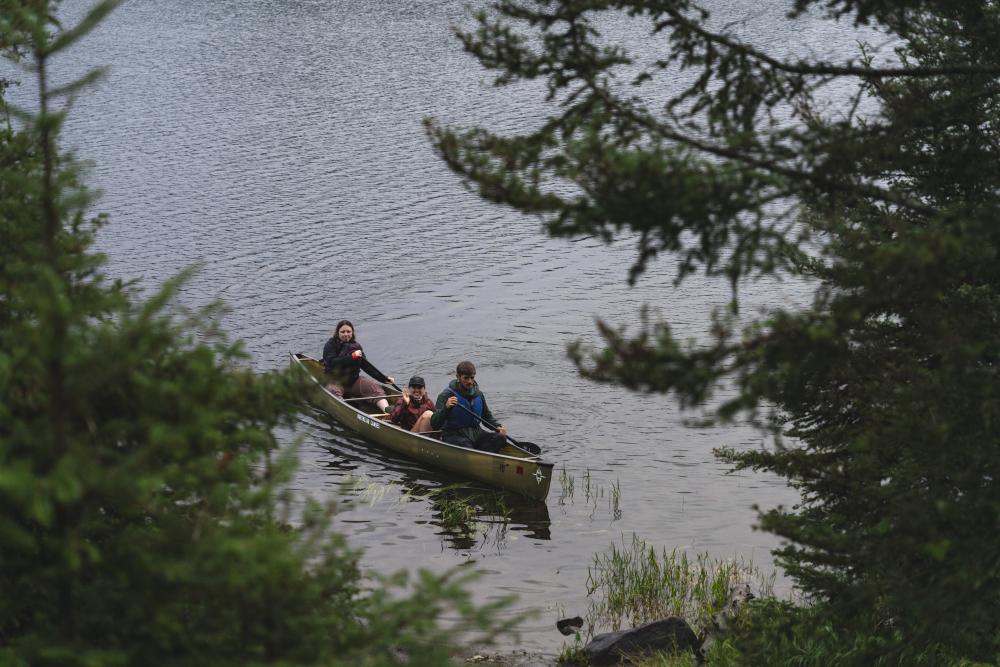
We set off in our canoes, making our way through three lakes, portaging trails, eating wild berries, and taking a slight detour to see where ferns grew out of black rocks under the white brush of a waterfall. When we got to camp, Megan, Eva, and Madie choreographed a synchronized swimming routine that they performed for Ryan, Alex, and me. Every so often, we’d hear the occasional clicks and whistles of the “Rose Lake Dolphin” that always seemed to correlate with Eva unable to conceal a smile behind her pursed lips.
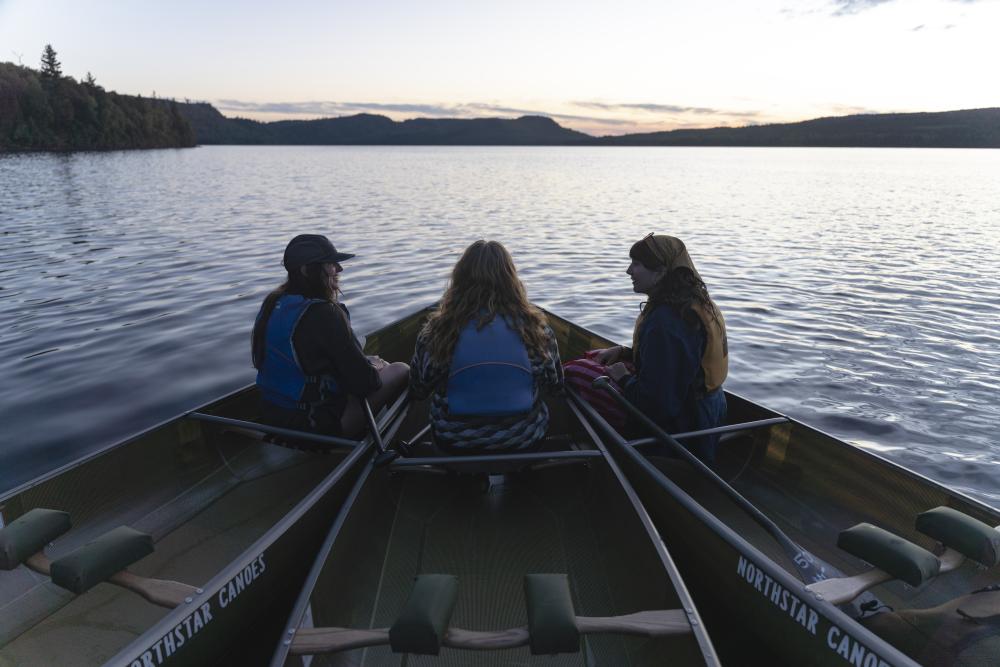
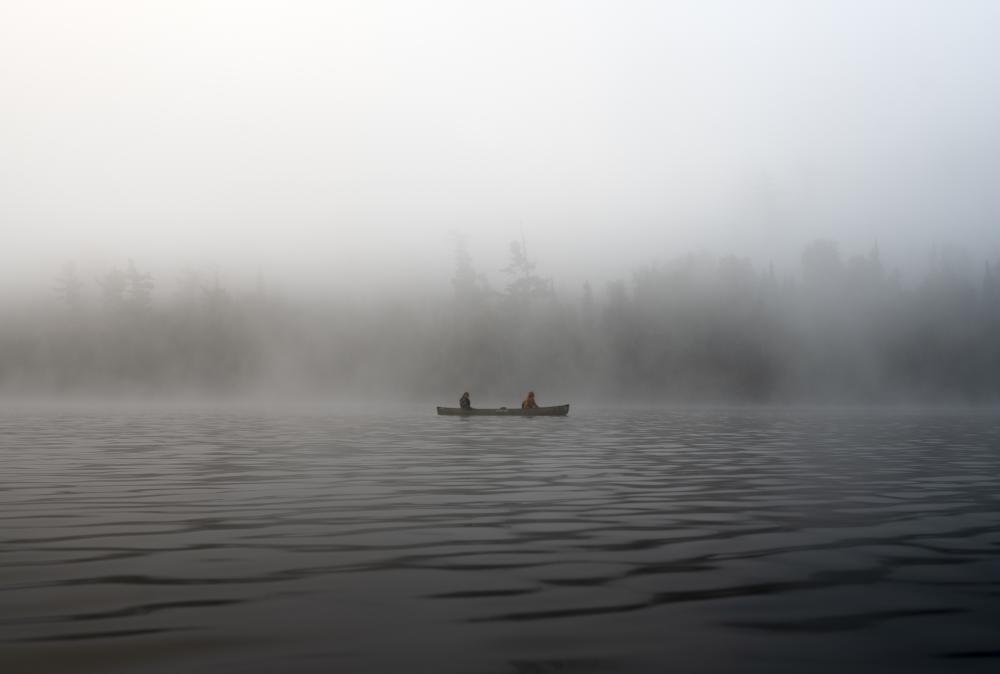
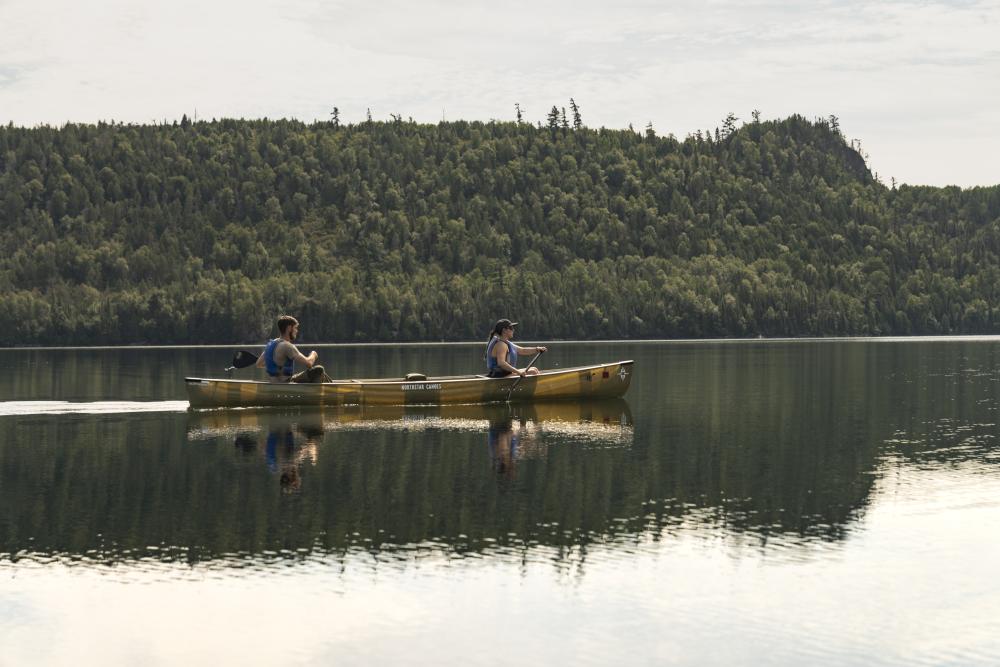
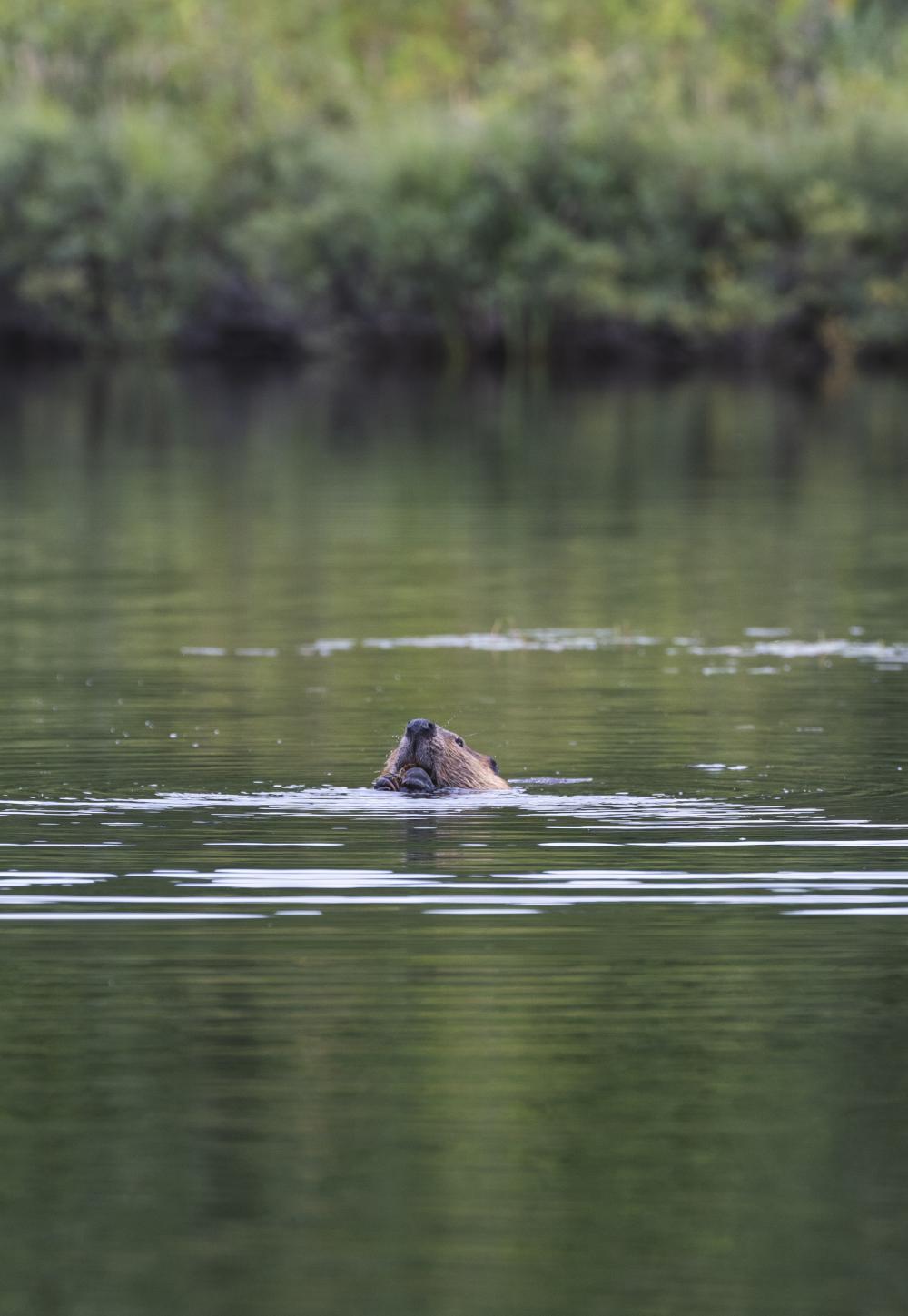
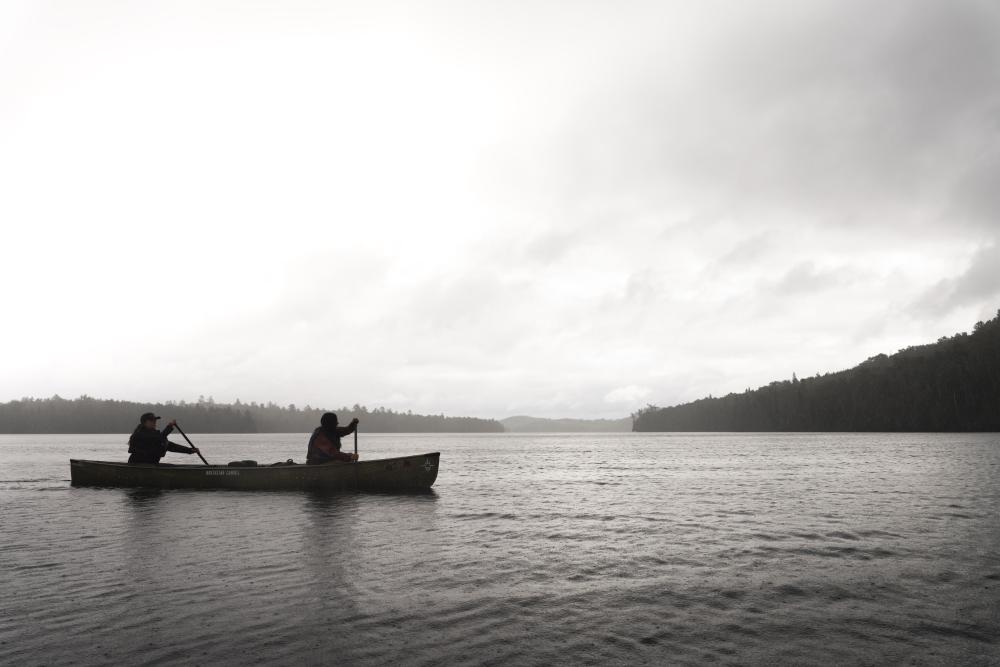
When we woke up for sunrise the next morning, fog breathed over Rose Lake. The shore’s dark rocks stood out against the white of the cloud that held us. By late morning, we were off on a quest to the supposedly “cleanest lake in the lower 48.” We canoed the border lakes that give the Boundary Waters its name, directly on the dividing line between the US and Canada. Though the beavers can cross to both sides, us humans are not afforded that privilege.
We reached South Lake mid afternoon. After lunch, Alex and I stayed back to film advocacy videos as the others began the paddle back to camp. Alex hiked over to another area of the peninsula, and for the first time, I was alone in the Boundary Waters. I closed my eyes and inhaled deeply, and when I opened my eyes, that feeling hit me again. Maybe it was how the environment had a similar feel to Michigan and upstate New York where I grew up, or the loons because my mom has always loved loons, or the abundance of lily pads dotting the shore the way they did at my childhood summer camp. Whatever the origin of that feeling, I thought to myself how wild it was that people see this beautiful place as a resource to be extracted from rather than for the oasis of life that it is.
On the paddle back, Alex and I saw two swans; their white silhouettes a stark contrast against the dark silken water and lake’s forested edge. By the time we reached Rose Lake, the final light of dusk was fading. But across the water, we could see Megan’s flashlight marking our camp. As we landed, Megan eagerly told us that the fire ban had been lifted, which meant one thing: s’mores. I couldn’t remember the last time I’d had a s’more. There’s a smug type of satisfaction in sinking into something that brought you so much joy as a kid.
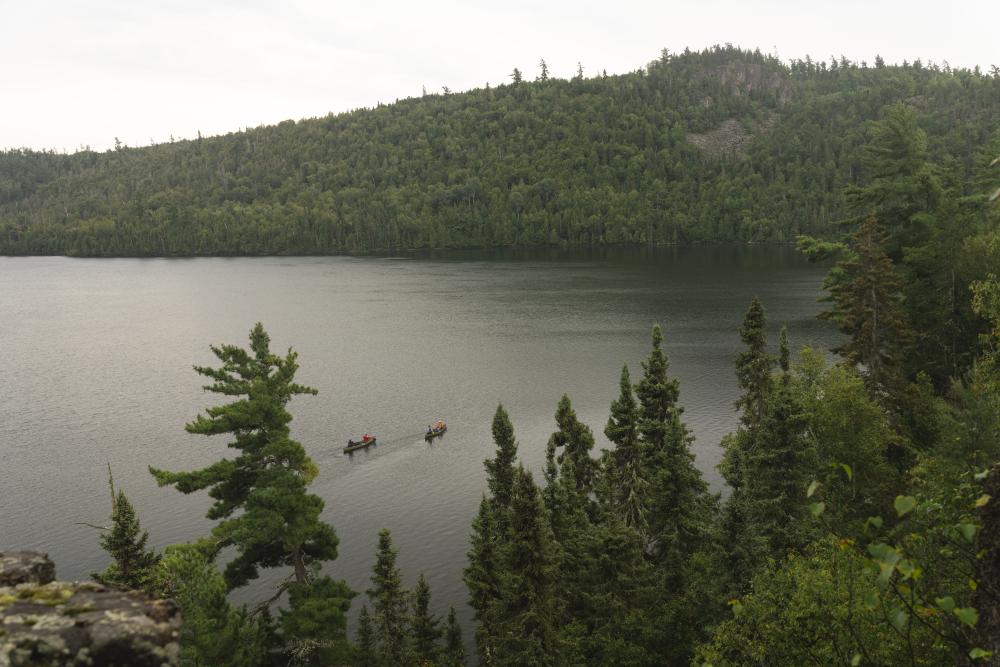
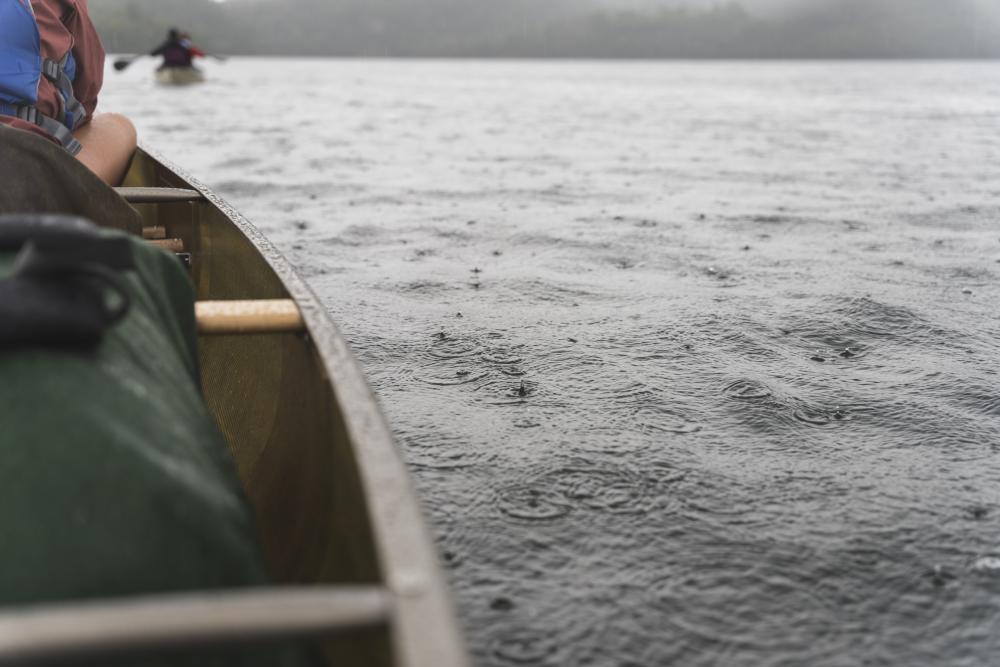
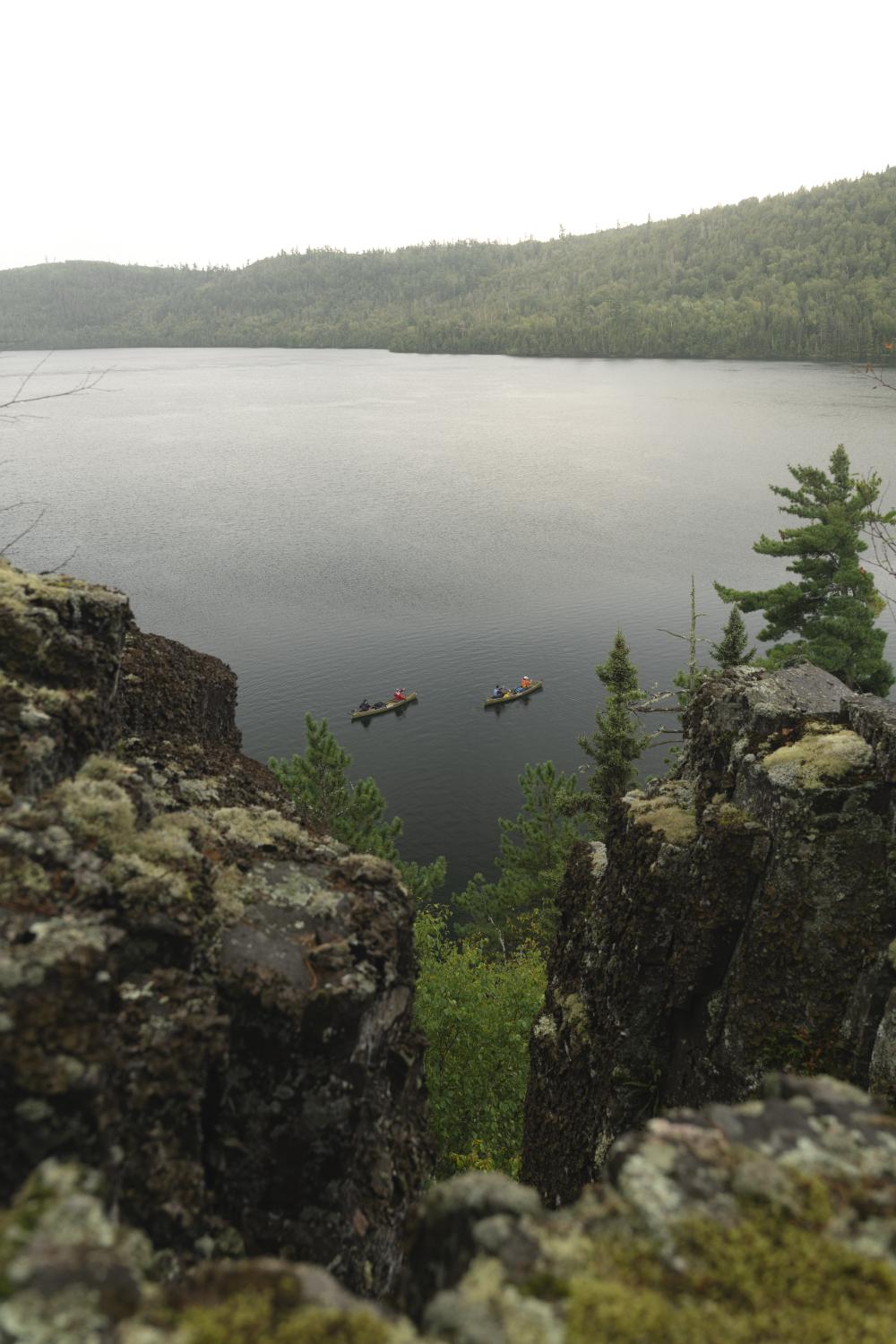
It was overcast and raining on our third morning. As we canoed, Ryan looked to the outcropping of rocks ahead with a vision. There was a break in the rain, so Ryan and I paddled to shore. We scrambled up the mossy rocks so Ryan, the photographer of the group, could get downward shots of the other two canoes uniquely angled in the vast expanse of the Boundary Waters.
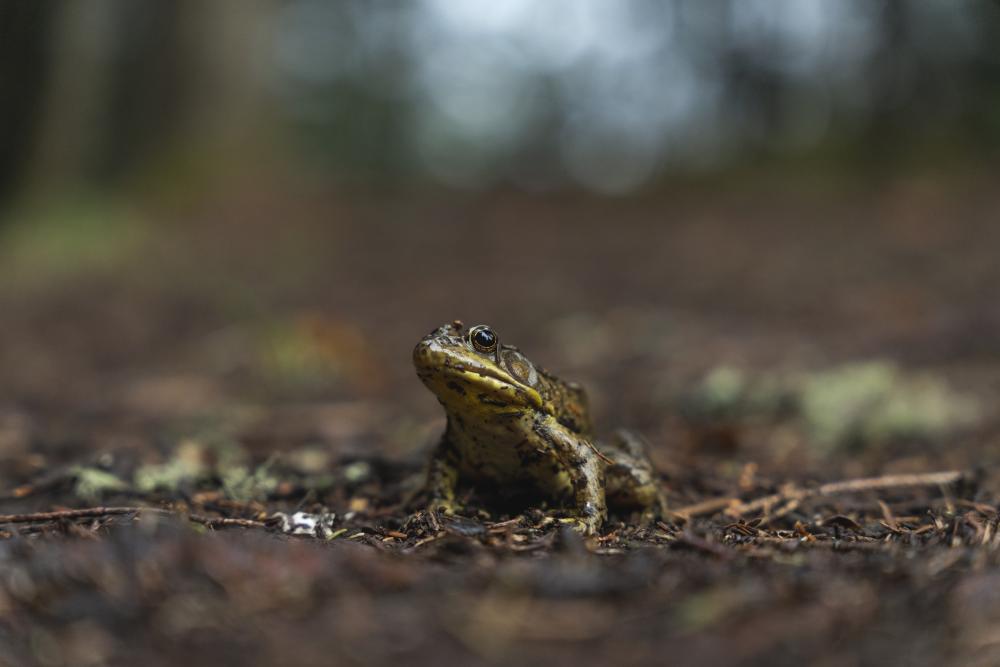
As soon as we got our tents up at our final camp, the sky flashed, light rain became torrential downpour, and frogs claimed the peninsula. This campsite was nearest to the trail Ben pointed out. I was not sure if I would have a chance to hike due to the thunderstorms, but as if the universe was on board with my competitive spirit, blue skies gave me the opportunity I was waiting for.
I got out of the canoe onto the portage trail where I bushwhacked over to the aforementioned section of the Caribou Rock Trail. Though there were a couple steep downs, I have to disagree with Ben’s claim about the difficulty of this hike. I did meet two wonderful older ladies who had just finished hiking the Border Route Trail. They agreed to be in my video and when they saw where I was headed they said, “It’s really hard and maybe you shouldn’t do it!” in the sweetest way possible.
I sat down on a lichen licked stone overlooking Duncan Lake as it started to rain. When it storms here, it’s a sound bath between lakes. The smell is that of petricore and wet moss. Despite the goal of this hike being to disprove our outfitter’s claims, my investigation yielded the answer to a different question. I pulled out the last three marshmallows that I’d swiped from the s’mores kit and a single serve of JIF natural peanut butter. I used to create this specific combination when I went camping growing up. That’s when it hit me. That feeling, my nostalgia, was that of falling in love with nature as a kid. Every sensory input in the Boundary Waters down to the texture of the air reminds me of that.
Seeing families with their kids out exploring the BWCA these last few days was one of the most heartwarming things I’ve witnessed recently. I think that’s why I care so much about protecting wild spaces. I’ve spent so much time outside that my connection to the land, even in places I am unfamiliar with, feels so personal. I think people often make the mistake of viewing us as separate from nature, when in fact, we were never meant to be separate from it. Just as much as it is the disconnection from nature that allows people to see it as something to be extracted from as a resource, it is the connection with nature that fosters a desire to protect our wild spaces.
It’s rare to get this type of solitude, this type of quiet peace in nature. I didn’t know how much I needed what the Boundary Waters offered until my inner child sat with me. I turned to the sky and let the rain fall on my face. As if I were a kid again, I stood and ran down the trail in time with the storm. The trail rippled with tree routes as I stopped to look at mushrooms. I placed my hands on the orange bark of a tree that was even more vibrant in the rain. I climbed over downed trees and wet rocks, and I smiled. I lifted my head to the green canopy covered in rain droplets, and I remembered what it was like to feel this for the first time.
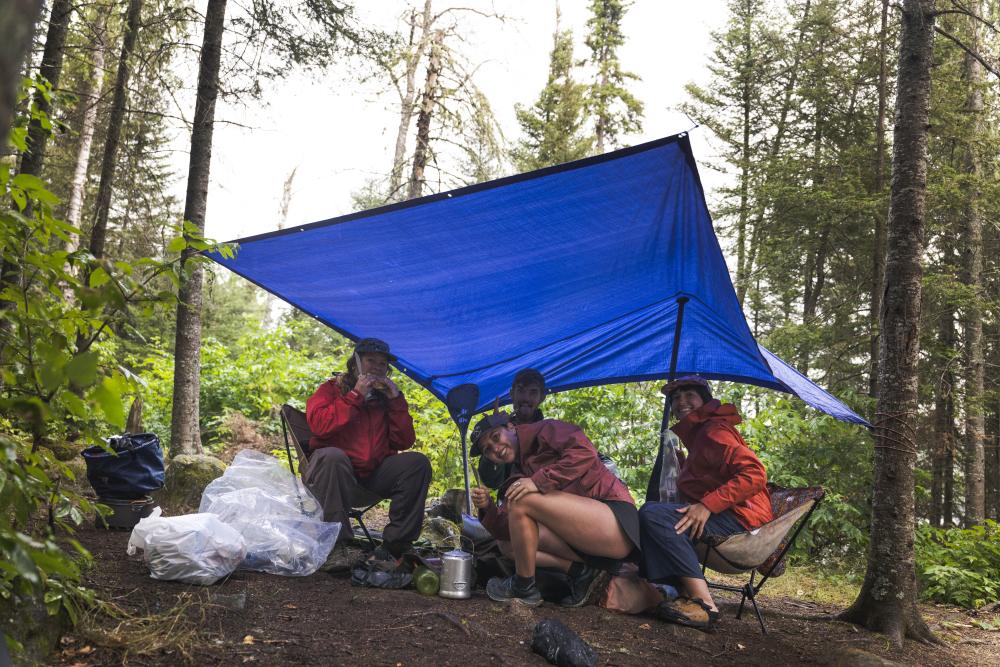
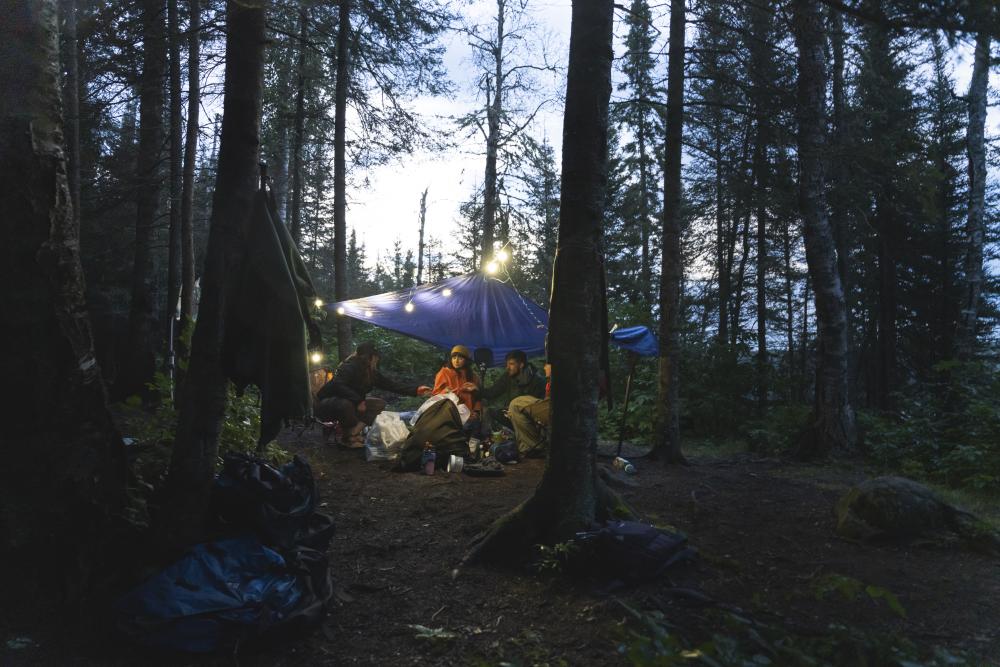
When I got back to the lakeshore where I started this quest, it was still raining. The lightning had stopped, but everyone at camp across the Lake was sheltered in their tents, so they of course did not see my signal. After flashing my light and squinting to see if I could make out anyone on the distant peninsula, I made the call to start bushwhacking back to camp. I made my way around the shore when I saw a light flash in the distance. I used the 10-times zoom on my phone camera to try to see if I could see anyone. Sure enough, I could just barely make out two people in a canoe in the distance. Before long, Alex and Megan paddled up and asked, “so, was it the hardest hike you’ve ever done?” I told them “no, but I did meet two sweet old ladies though.” We reunited with the others back at camp to have the best pad thai I’ve had in my entire life. The six of us circled under the tarp we’d affixed to the surrounding trees, telling crazy stories and laughing the rest of the evening.
We made quick work of packing up camp the next morning, put the last of the powdered coconut milk into our coffees, and paddled back to the Hungry Jack Outfitters to conclude our time here.
I could write a love letter to the Boundary Waters. This special wilderness gave me an access point to connect with a part of myself that sometimes feels distant. I saw people from ages approximately 3 to 70 full of joy these last few days, and I can only imagine they feel the same way. This place belongs to all of us. It shouldn’t be up to changes in administration or leases from foreign mining companies being instated and removed whether or not our public lands, their ecosystems, and the communities who rely on them are protected.
Consider this my love letter to the Boundary Waters.
Sincerely,
Noelle
Become a sustainer!