How fighting for the Boundary Waters shaped my future
Join us for a webinar on Tuesday, December 1, 2026 at 7:00 PM CST to learn more about the Boundary Waters Youth Network!
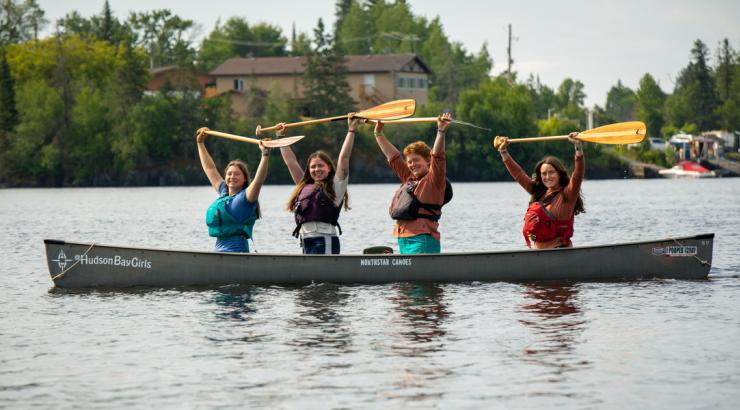
When I first discovered Save the Boundary Waters’ cause, I was eleven years old. I had just gone on my first canoe trip: a seven-day trip along the Border Route with three nights in the Boundary Waters Canoe Area Wilderness and three nights in Quetico Provincial Park. My trip with the Northern Lakes Girl Scout Canoe Base (NLCB) was full of songs, blueberries, aluminum-canoe portaging, waterfalls, long paddling days, otter spotting, and, of course, Girl Scout Cookies.
At the end of my trip, my fellow scouts and I met Amy Freeman to learn about her upcoming year-long trip in the Boundary Waters to raise awareness for “Save the Boundary Waters,” the organization leading the fight to permanently protect the Boundary Waters watershed. As she told us about the foreign-owned mining company called Twin Metals Minnesota and their proposed copper mine, and how any pollution would impact the Boundary Waters, I was shocked. We traced maps of the path of pollution, and I slowly recognized the lakes and campsites I had just fallen in love with. I knew in that moment that I wanted to do something to protect the Boundary Waters, but I wasn’t sure how to get involved. I signed up for Save the Boundary Waters’ email list, but as a girl from a small city in Indiana, it did not feel like there was much for me to do about the problem. The one thing I felt sure of was that I had to keep going on canoe trips.
Fast forward a couple of years, I was in high school, and I had returned to the Boundary Waters every summer with the NLCB, but still felt unsure how to advocate for the space I loved. Eventually, I learned about the Boundary Waters Youth Network (formerly called “Kids for the Boundary Waters”) that was offering trips where young people could fly-in to Washington, D.C. and lobby for a permanent copper-mining ban in the headwaters of the Wilderness. I applied for the program and was ecstatic to be accepted.
Due to the COVID-19 pandemic, my fly-in was shifted to a virtual format, but that did not take away any of the excitement. Through trainings with the team at Save the Boundary Waters, I learned how to tell my story about why the Boundary Waters should be protected and then attended virtual meetings with senators, representatives, and even then U.S. Secretary of the Interior, Deb Haaland. The meetings grew my confidence, showed me how to be an advocate for public lands, and helped me realize that I wanted a future in environmental advocacy.
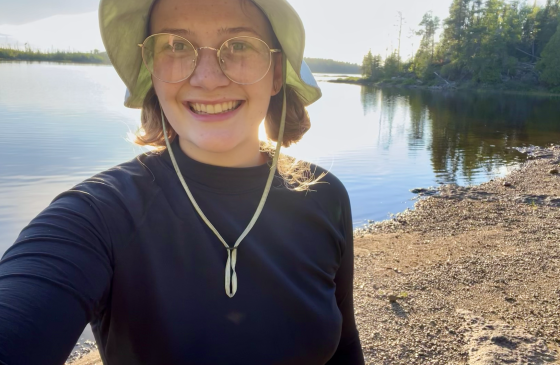
In the months after my fly-in, I graduated high school and began attending Ball State University studying Political Science, Sustainability, and History. It is no coincidence that the fields I studied in college overlap with my experience advocating for the Boundary Waters. Between school years, I spent summers guiding Boundary Waters trips for the NLCB and doing environmentally focused internships. This May, I graduated from Ball State and moved up to Ely for the opportunity to intern with Save the Boundary Waters, doing regional outreach and organizing. In October, I began a remote fellowship with Save the Boundary Waters, continuing my work from the summer and leading the Youth Network.
Working for Save the Boundary Waters and leading the Youth Network has been a full-circle experience, and I am excited to be helping craft the next generation of Boundary Waters Youth Network programming. Acid mine pollution isn’t just bad for the environment in the short term; it’s a permanent stain on the ecology of the most visited federal wilderness that will have cascading effects upon the state economy, culture, and prosperity. Never has there been a more important time for young people to stand up for what they believe in, and I surely believe that the Boundary Waters is worth protecting for perpetuity. The opportunity to work with a network of empowered and dedicated young people from across the country is deeply inspiring. Through hard work, storytelling, and camaraderie, I know that we can protect the Boundary Waters from copper mining not just for ourselves, but for future generations of young people to enjoy.
As we look to the future, we need people like you now more than ever to advocate for public lands. Together, we can empower one another through in-person and virtual engagement opportunities, training, social media, and at-home programming. As we work to inspire the next generation, I am continually grateful for the role the Boundary Waters and Save the Boundary Waters have played in shaping my career. You never know how a canoe trip, or maybe even a fly-in, might change your life.
To keep growing this movement, we need your help! Visit https://www.savetheboundarywaters.org/youth to learn how you can make a difference in the fight to protect the Boundary Waters.